Finding Sculptures in the Ordinary
Last year, between commercial commissions, I gave myself a personal project with a deliberately simple brief: buy some interesting objects from an op shop, pick up a few things from the fruit and vegetable aisle, and see what happened when I put them together in front of a camera.
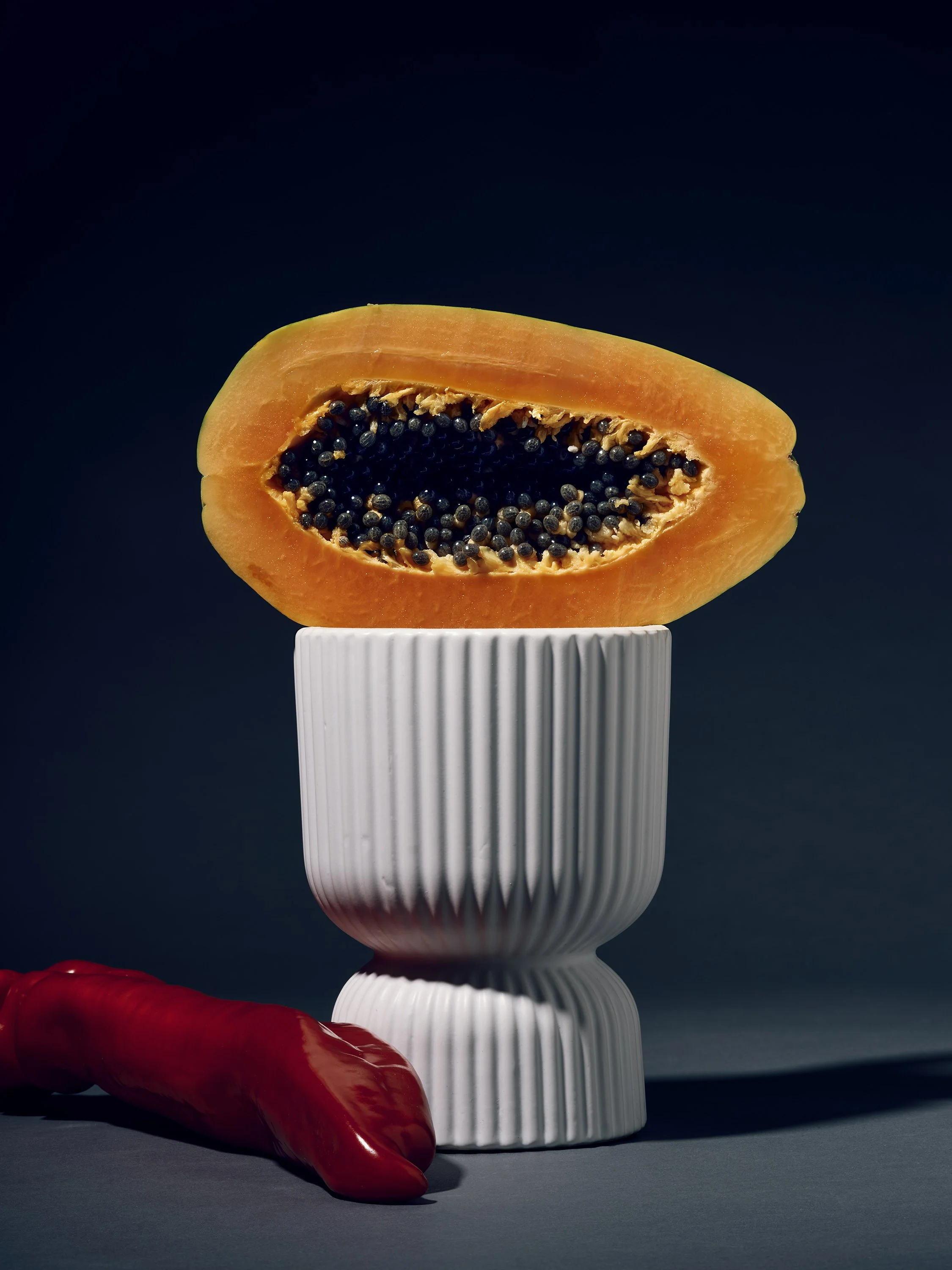
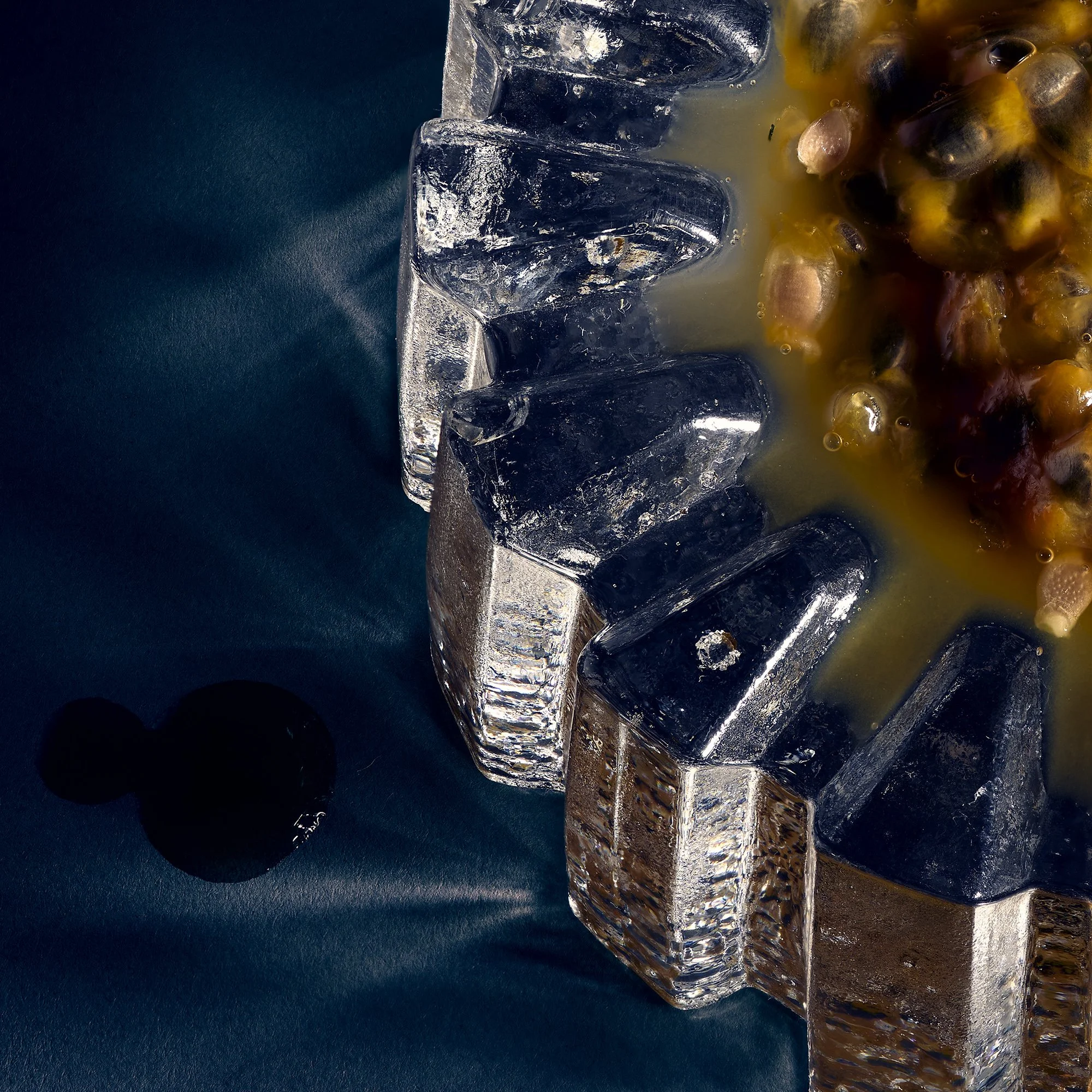
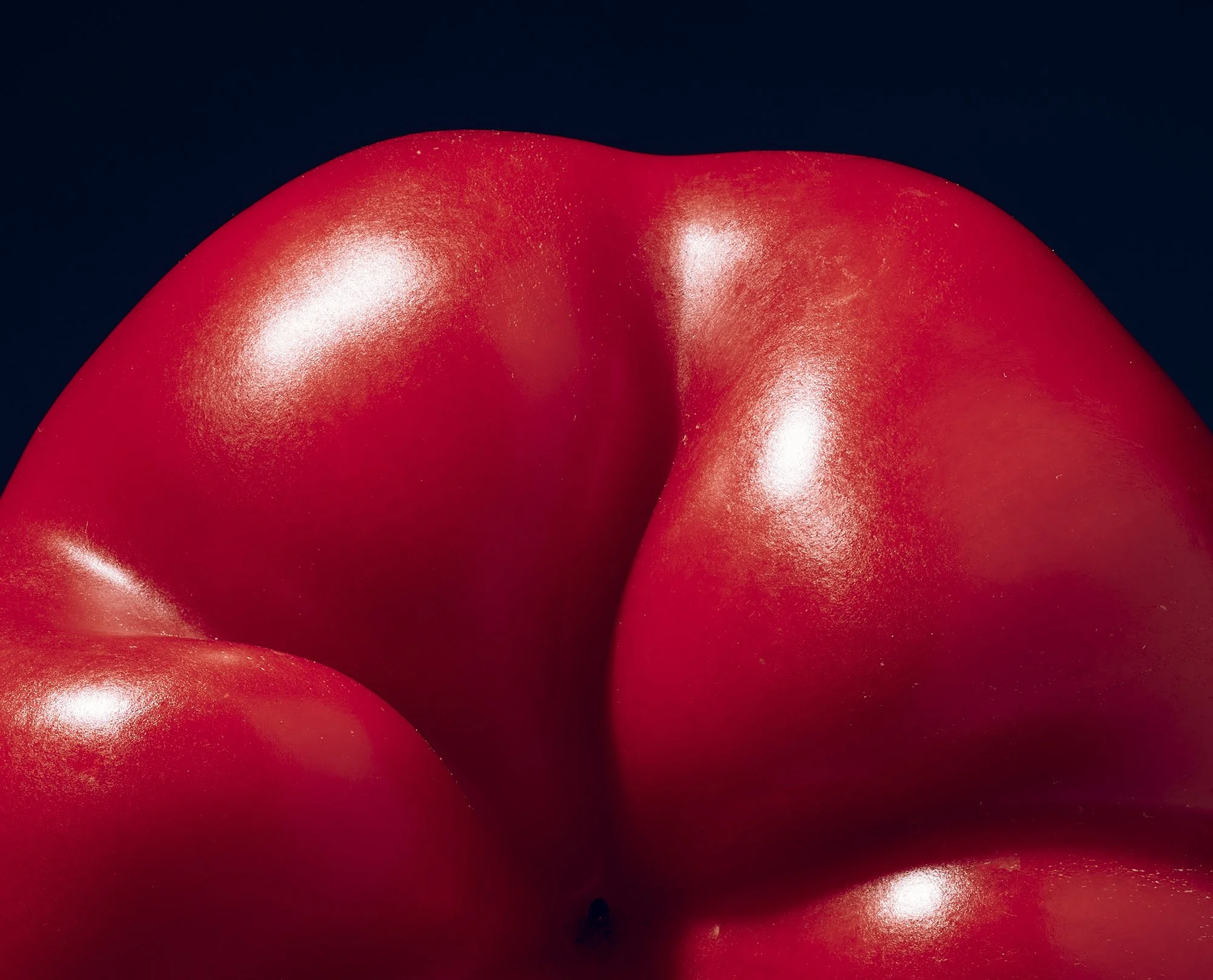
The objects I found were modest - a chunky ribbed glass vessel, a white fluted ceramic cup with an almost Greco-Roman quality to it, a figure-eight shaped dark glass tray. Nothing expensive, nothing precious. But placed alongside a halved papaya, a blood orange, a passionfruit, or a red chilli, the results were more interesting than I expected - the objects and produce combining in ways that felt more sculptural than domestic.
That shift - from the everyday to the considered - is something I find myself chasing in all my work, whether I'm photographing a building or a boardroom. It's about looking past the obvious read of a subject and finding the geometry, the texture, the tension that sits just underneath.
The colour palette was a deliberate choice - deep teals and navies as backgrounds to contrast with the vivid reds and oranges of the produce, with the clean white of the ceramic sitting between the two. The white fluted vessel became an unplanned through-line, appearing across multiple shots as a kind of recurring plinth.
For this project I used macro lenses to get genuinely close - close enough that a capsicum becomes an abstract landscape of lobes and highlights, or the ribbed surface of a glass object becomes something almost architectural. I also used focus stacking, combining multiple exposures using Helicon Focus software to achieve sharpness across the entire subject - something that's simply not possible in a single frame at true macro distances. One of the lenses I used was an old Pentax film lens, adapted to fit my camera, which brought its own particular quality to the images. Both the focus stacking process and shooting with adapted vintage lenses are subjects I plan to explore in more detail in future posts.
Personal projects like this are where I get to experiment, make mistakes, follow instincts, and occasionally surprise myself. They also serve as a reminder that the same eye that reads proportion and light in an architectural space can find something just as interesting in a halved papaya.